


--------
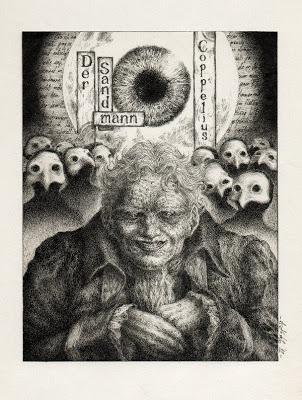
Recientemente he leído por primera vez algunas historias del escritor E.T.A.Hoffmann, y solo puedo decir que me arrepiento de no haberle descubierto antes. Si lo comparamos con otros autores cuya temática era bastante similar a la suya y que tuvieron mucha más repercusión, como Edgar Allan Poe, pues Hoffmann parece quedar relegado al plano de escritores conocidos tan solo por aquellos a los que les apasione la literatura y los relatos cortos de terror. Porque siempre está la típica persona que se declara gran amante de los relatos cortos de terror, pero que apenas sabe nombrar otros autores que no sean Lovecraft o Poe. Pero vayamos al tema. El cuento del que quiero hablar es Coppelius, o también llamado El Hombre de Arena, un relato corto que me ha causado cierto impacto por la gran carga de terror psicológico centrada en los terrores infantiles. No es algo sobre lo que pensemos a menudo, pero lo cierto es que los miedos que surgen en nuestra mente durante la infancia, tienen su repercusión en la edad adulta sometiéndonos a un fuerte condicionamiento. Me vais a disculpar, pero no voy a hacer un resumen de la historia del cuento, porque si esto que voy a decir a continuación capta vuestra atención, no buscaréis resúmenes sino que buscaréis leer la historia completa: Nathaniel, el protagonista, desarrolla un terror hacia lo que el llama el Hombre de Arena, que al final acabará transformándose en un trauma que le durará hasta la edad adulta. El problema es que puede que ese terror sea todo una mentira, algo surgido en su imaginación que realmente no supone ninguna amenaza, pero que le condiciona hasta el final de sus días. Hoy en día, este recurso de crear figuras terroríficas que son producto de la imaginación y que en realidad nunca estuvieron allí, parece que está ya más que explotado. Pero para la época en la que fue escrito este relato, 1817, fue toda una revolución a la hora de analizar los miedos infantiles. Incluso Freud dijo al respecto de este cuento, que ese miedo al Hombre de Arena que secuestra a los niños malos, es un temor inconsciente a la castración. Freud nunca decepciona, siempre acaba llevándolo todo al terreno de la castración.
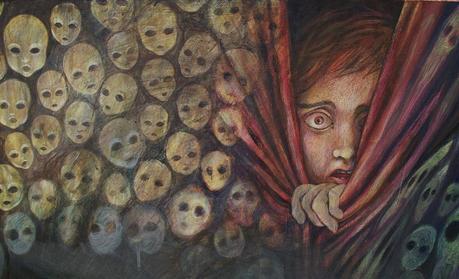
Una de las cuestiones que se plantean en el relato, es el poder de un trauma infantil a lo largo de la vida adulta
Asustado ante la amenaza de que el hombre de arena del que le habla su madre venga a por él, una noche a Nathaniel se le ocurre ocultarse en el armario de su padre para poder verlo de una vez por todas. Este comportamiento no es tan irracional como parece. El miedo muchas veces va de la mano de la curiosidad; a veces, por mucho pánico o asco que sintamos hacia algo, no podemos evitar querer investigar más sobre ello, porque el miedo de verdad no es tanto ver aquello que nos asusta, sino no poder verlo porque eso significa que no lo podemos definir, que no le podemos poner un nombre; en definitiva, que no podemos saber a qué le tenemos miedo exactamente, y la incertidumbre es un terror en sí. Algunos dicen que esta reacción se debe al morbo, otros que forma parte del instinto de supervivencia, Freud diría que es por miedo a la castración o por el complejo de Edipo. Sea como sea, esto es una realidad, y Hoffman supo comprender muy bien ese sentimiento de atracción inconsciente hacia el miedo.
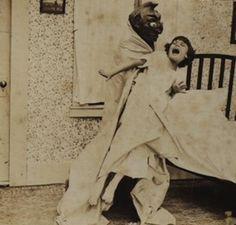
Apuesto a que esta imagen es escalofriante por muchos motivos, y también estoy segura de que no podéis quitarle la vista de encima y os encantaría conocer la historia detrás de esta foto
Y para muestra de lo que hablo, aquí está una cita del propio Nathaniel hablando de su infancia: "Nada me agradaba tanto como oír o leer cuentos de espiritas, de hechiceros y de duendes; pero a todo esto anteponíase el Hombre de Arena, cuya imagen dibujaba yo con yeso o carbón en las mesas, en los armarios y en las paredes, representándole bajo las figuras más extrañas y horribles".
Aquí se demuestra cómo Hoffmann entiende a la perfección este rasgo de la psicología humana. El Hombre de Arena es lo que más le aterra, pero no puede dejar de imaginarse cómo sería su aspecto. Inconscientemente, busca un enfrentamiento con esa figura para estar preparado cuando llegue el momento de encontrarse con él de verdad. Aún queda por saber qué repercusión tienen estas vivencias en el Nathaniel adulto, y sobre todo, queda por saber por qué a este Hombre de Arena se le da el nombre de Coppelius. Explicaré todas estas incógnitas en la próxima entrada. Mientras tanto, recordad qué forma tenían vuestros propios hombres de arena. Todos los comentarios son bienvenidos.
Fuente de las imágenes:
http://yosoylector.blogspot.com.es/2013/08/el-hombre-de-arena-cuento-de-eta-hoffman.html
https://uk.pinterest.com/pin/482940760018210339/
https://es.pinterest.com/pin/153192824800554755/-------------

I have recently read for the first time some stories written by E.T.A.Hoffmann, and I just can say that I'm sorry for not having discovered him before. If we compare him with other authors who had similar topics and more porpularity, like Edgar Allan Poe, Hoffmann is relegated to the set of authors who are known just by those who love literature and short horror stories. There is alway the typical average person who says he/she adores short horror stories, but barely knows other writers different than Lovecraft or Poe. But let us continue with the subject. I want to talk about the short story called Coppelius, or also known as The Sandman, a story which has caused me some impact due to the psychological terror focused on children night's terrors. It's not something we spent time to think about, but what it's certain is that the fears which arise during our childhood years in our mind, have consequences into adulthood submitting us to hard conditioning. You are going to apologize me, but I'm not going to summarize the plot of the story, because if what I'm going to tell you next does catch your attention, then you won't look for summaries but you will read the whole story: Nathaniel, the main character,develops a fear towards what he calls the Sandman, which at the end, it will grow until becoming into a trauma that will last even during adulthood. The problem is that it may be possible that that fear was a lie, something created in his imagination which actually it doesn't represent a threat at all, but it marks him until the end of his days. Nowadays, this way of creating terrific figures that come from the imagination and that never existed actually, it seems that it's too overused. But during the period in which this story was written, 1817, it was a revolution in terms of analyzing children's fears. Even Freud said related to this story that this fear to the Sandman that kidnaps bad kids, represents an unconscius fear to castration. Freud never disappoints, he always connects everything with castration.
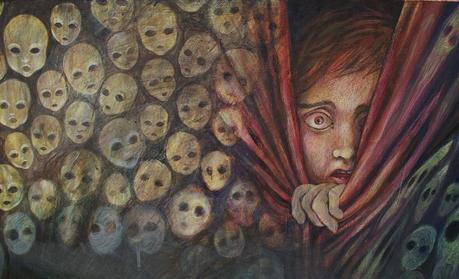
One of the issues posed along story, is the power of children's trauma during adulthood
Scared by the threat of that Sandman his mother talks about coming after him, one night Nathaniel decides to hide within his father's cupboard to see him once and for all. This behaviour is not so irrational as it may seem. Many times, fear goes hand in hand with curiosity; sometimes, it doesn't matter all the fear and disgust we feel towards something, we can't avoid to research more about it because the real fear is not so much to see whatever scares us, but being not able of seeing it because that means we can't define it, we can't name it; in short, we can't know what scares us exactly and uncertainity is terror itself. Some people say this reaction is caused by morbidity, other people consider that it's part of the suvivial instinct, Freud would say that it's fear to castration or Oedipus complex. Either way, that is a reality, and Hoffmann understood pretty well that feeling of unconscious attraction towards fear.
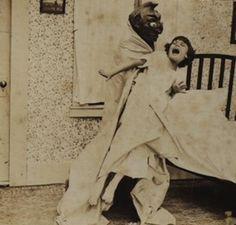
I bet this picture is chilling for many reasons, and I'm also sure you can't take your eye off it and you would love to know the story behind that photo
And as an evidence of what I'm talking about, here you have a quotation by Nathaniel himself talking about his childhood: "Nothing was to me more delightful than to read or hear horrible stories of goblins, witches, pigmies, etc; but above them all stood the Sandman, whom, in the oddest and most frightful shapes, I was always drawing with chalk or charcoal on the tables, cupboards, and walls".
Here is shown how Hoffmann understands perfectly this feature of the human psychology. The Sandman is what scares him the most, but he can't stop imagining how his aspect would be. Unconsciously, he seeks to face that figure to be ready when the moment of meeting him comes. It remains to know what effects these experiences have in the adult Nathaniel, and it remains to know specially why the Sandman is called Coppelius. I will explin all these questions in the next entry. Meanwhile, just remember what shape your own Sandman had. All comments are welcome.
Images source:
http://yosoylector.blogspot.com.es/2013/08/el-hombre-de-arena-cuento-de-eta-hoffman.html
https://uk.pinterest.com/pin/482940760018210339/
https://es.pinterest.com/pin/153192824800554755/------------







 Comecocos
 Karate Blazers
 Magical Cat Adventure
 Nostradamus