


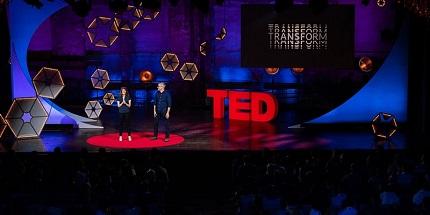
 Y, como llevo haciendo ya desde hace doce años, uno de los últimos posts de este blog, normalmente el penúltimo, lo publico el 30 de Diciembre recogiendo y comentando brevemente las charlas TED que he escuchado este año.
Y es que si, allá por Noviembre de 2011, adopté la costumbre de, cada fin de semana, con unas pequeñas excepciones en vacaciones, escuchar un TED Talk el fin de semana, normalmente el sábado.
Este año 2025 he escuchado, o he visualizado, 47 charlas, para alcanzar un total de, hasta la fecha, 711 charlas.
En las charlas de este año dominan, como en el fondo tampoco es sorprendente, las que tienen que ver con inteligencia artificial. También aparecen con cierta frecuencia charlas relacionadas con neurociencia y luego un salpicón de temas diversos.
No abundan este año los personajes muy reconocidos aunque sí desfilan por mi listado personas como Sam Altman, Eric Schmidt, Lawrence Lessig o Steve Pinker. Pero, aunque siempre me interesan los grandes personajes o los grandes speakers, últimamente selecciono más atendiendo al tema de la charla que al ponente y siguiendo en buena medida las charlas que sugiere la propia TED en su página.
Las #TEDTalks de 2025
Y, sin más, aquí va el listado de charlas de 2025:- Simon Lancaster: The Art Of Spin
- Hiroki Koga: The sweet future of vertical farming
- Nikolaus Lang: 5 ways leaders can adapt to shifting geopolitics
- Lawrence Lessig: How AI could hack democracy
- Elle Cordova: Poetry and music that reaches across the digital void
- Jennifer Golbeck: Is AI progress stuck?
- Thomas Dohmke: Can Europe win the age of AI?
- Bill Gross: The single biggest reason why start-ups succeed
- Edo Liberty: How does long-term memory work in AI?
- Tiffany Watt Smith: The history of human emotions
- Tessa West: The problem with being "too nice" at work
- Sandrine Thuret: You can grow new brain cells. Here's how
- Rajeev Ronanki: For future AI, the prompt is you
- Iren Arslanova: Does your heartbeat shape your sense of time?
- David Su: How to pose for a photo with confidence
- Sahlinee Sharma: 4 steps to unlock your kid's math potential
- Alexander Wang: War, AI and the new global arms race
- Rosita Najmi: What's your leadership language?
- Sergiu Pasca: How we're reverse engineering the human brain in the lab
- Phebe Vayanos: AI could increase equality — if we design it right
- Conor Rusomanno: A powerful new neurotech tool for augmenting your mind
- Jordan Klepper: A comedian's take on how to save democracy
- Riccardo Loconte: What if AI could spot your lies?
- Agnieszka Pilat: An AI artist's take on tech and legacy
- Jessica Apotheker: What will happen to marketing in the age of AI?
- Bermt Bornich: Meet NEO, your robot butler in training
- Lisa Kaltenegger: Are we alone in the universe? We're close to finding out
- Pete Stravros: The secret ingredient of business success
- Sam Altman: OpenAI's Sam Altman talks ChatGPT, AI agents and superintelligence
- Sara Crawford-Bohl: How to speak up — even when you don’t want to
- Nita Farahany: Your right to mental privacy in the age of brain-sensing tech
- Daniel Suáres: The kill decision shouldn't belong to a robot
- Eugenia Kuyda: Can AI companions help heal loneliness?
- Brian Lowery : What makes us human in the age of AI? A psychologist and a technologist answe
- Eric Schmidt: The AI revolution is underhyped
- Shahram Izadi: The next computer? Your glasses
- Allado: MCDowell: Our creative relationship with AI is just beginning
- Chloé Hayden: The autism spectrum isn't what you think it is
- Megan J. McArdle: I'll probably lose my job to AI. Here's why that's OK
- Kathryn Mannix: What happens as we die?
- Mustafa Suleyman: What is an AI anyway?
- Sitoyo Lopokoiyit: A story of moral imagination and bold entrepreneurship
- Philippe Villeneuve: The inside story of Notre-Dame’s incredible reconstruction
- Amy Baxter: How to hack your brain when you're in pain
- Eric Nguyen: How AI could generate new life-forms
- Steven Pinker: How common knowledge shapes the world
- Jeff Hawkins: How brain science will change computing
Mirando hacia 2026
¿Y de cara a 2026?
Pues no creo que cambien mucho las cosas. Seguiré visitando, seguro, las charlas que tengan que ver con inteligencia artificial y robótica; seguramente continuarán apareciendo charlas sobre neurociencia o temas científicos y, cualquier otro tema, quizá sobre ética, quizá sobre geo-estrategia, quizá grandes retos de la humanidad.
Iremos viendo.
De momento, ya tengo seleccionadas más de 20 charlas que alimentarán mi curiosidad, hasta Mayo de 2026. Y, de ahí, en adelante.
El 30 de Diciembre de 2026, revisamos esas nuevas TED Talks.
Artículos de este blog relacionados
- Mis #TEDTalks de 2024
- Mis #TEDTalks de 2023
- Mis #TEDTalks de 2022
- Mis #TEDTalks de 2021
- Mis #TEDTalks de 2020
- Mis #TEDTalks de 2019
- Mis #TEDTalks de 2018
- Mis #TEDTalks de 2017
- Mis #TEDTalks de 2016
- Mis #TEDTalks de 2015
- Mis TED Talks de 2014
- 100 TED Talks a modo de regalo





 Puzzle Bobble
 Karate Blazers
 Puzzle De Bloques
 Magical Cat Adventure