


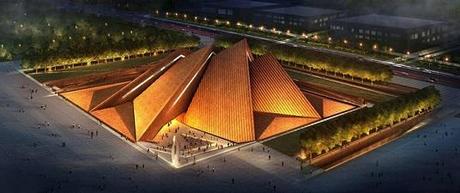
El Dantong Art Museum diseñado por el estudio Foster + Partners es uno de los cuatro edificios nuevos de la plaza cultural de la nueva ciudad de Datong en China. El “Museo del Siglo XXI” tendrá 32.000 m2 de espacios flexibles y eficientes, y una impactante sala central de 37 metros de altura y 80 metros de largo.
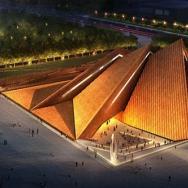
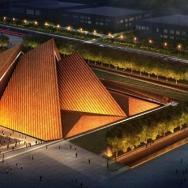
Las formas del edificio se conciben como una erupción paisaje, deja visible a nivel del suelo sólo la parte superior del techo, compuesto por cuatro picos piramidales interconectados entre si, semejando los picos naturales de la zona montañosa.
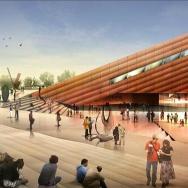
Se accede al museo a través de una suave rampa y una escalera, que se integran con la plaza hundida para crear un anfiteatro informal. El interior del museo se emplaza por debajo del nivel de la plaza para mantener el equilibrio en altura con los otros edificios culturales y aumentar al máximo el volumen interno. Los servicios se integran a la estructura y la sala principal esta diseñada para permitir el ingreso de vehículos que transporten esculturas de gran escala, escenografías y escenarios.
La totalidad de la cubierta está compuesta por placas de acero corten de color tierra para sobrellevar de la manera natural paso del tiempo. El techo representa el 70 por ciento de la superficie expuesta, aislado con doble capa de acuerdo a los códigos de construcción, y sólo el 10 por ciento se superficie acristalada para reducir el mantenimiento y el consumo de energía al mínimo. La finalización de la obra esta prevista para el año 2013.
INFORMACION DE LOS ARQUITECTOS
Datong Art Museum – China’s ‘Museum of the 21st Century’ – is one of four major new buildings within Datong New City’s cultural plaza. The centrepiece of the 32,000-square-metre venue is the Grand Gallery, a heroically scaled, top-lit exhibition space measuring 37 metres high and spanning almost 80 metres, in which artists will be commissioned to create large-scale works of art. The space is flexible and efficient – services are integrated with the structure and the gallery can be accessed directly by an articulated 40-foot container vehicle to install large-scale sculptures, stage and lighting equipment.
Externally, the building’s form is conceived as an erupted landscape, with only the top of the roof visible at ground level. Like natural peaks, the roof is clad in earth-toned Corten steel, which will weather naturally over time. By sinking the building into the new plaza, it relates in scale to the three other cultural buildings in the group, balancing the overall composition of the district masterplan while maximising the internal volume. The roof is composed of four interconnected pyramids, which increase in height and fan outwards towards the four corners of the cultural plaza. A clerestory between each volume creates a dynamic play of light and shade internally, while illuminating the building from within to create a beacon for the new cultural quarter at night. Visitors approach via a gentle ramp and stair, which are integrated with the sunken plaza to create an informal amphitheatre. The arrival sequence culminates in a dramatic overview of the Grand Gallery. Further exhibition spaces, with state-of-the-art climate controls, are placed around the perimeter of the museum and a children’s gallery, group entrance lobby, café, restaurant and support spaces are arranged around sunken courtyards to draw in daylight.
The building’s efficient passive design responds to Datong’s climate. High-level skylights take advantage of the building’s north and north-west orientation, using natural light to aid orientation while minimising solar gain and ensuring the optimum environment for the works of art. A high-performance enclosure further reduces energy use. The roof, which accounts for 70 per cent of the exposed surface area, is insulated to twice building code requirements and, with just 10 per cent glazing, maintenance requirements are also minimised.






 Puzzle Bobble
 Karate Blazers
 Puzzle De Bloques
 Magical Cat Adventure