


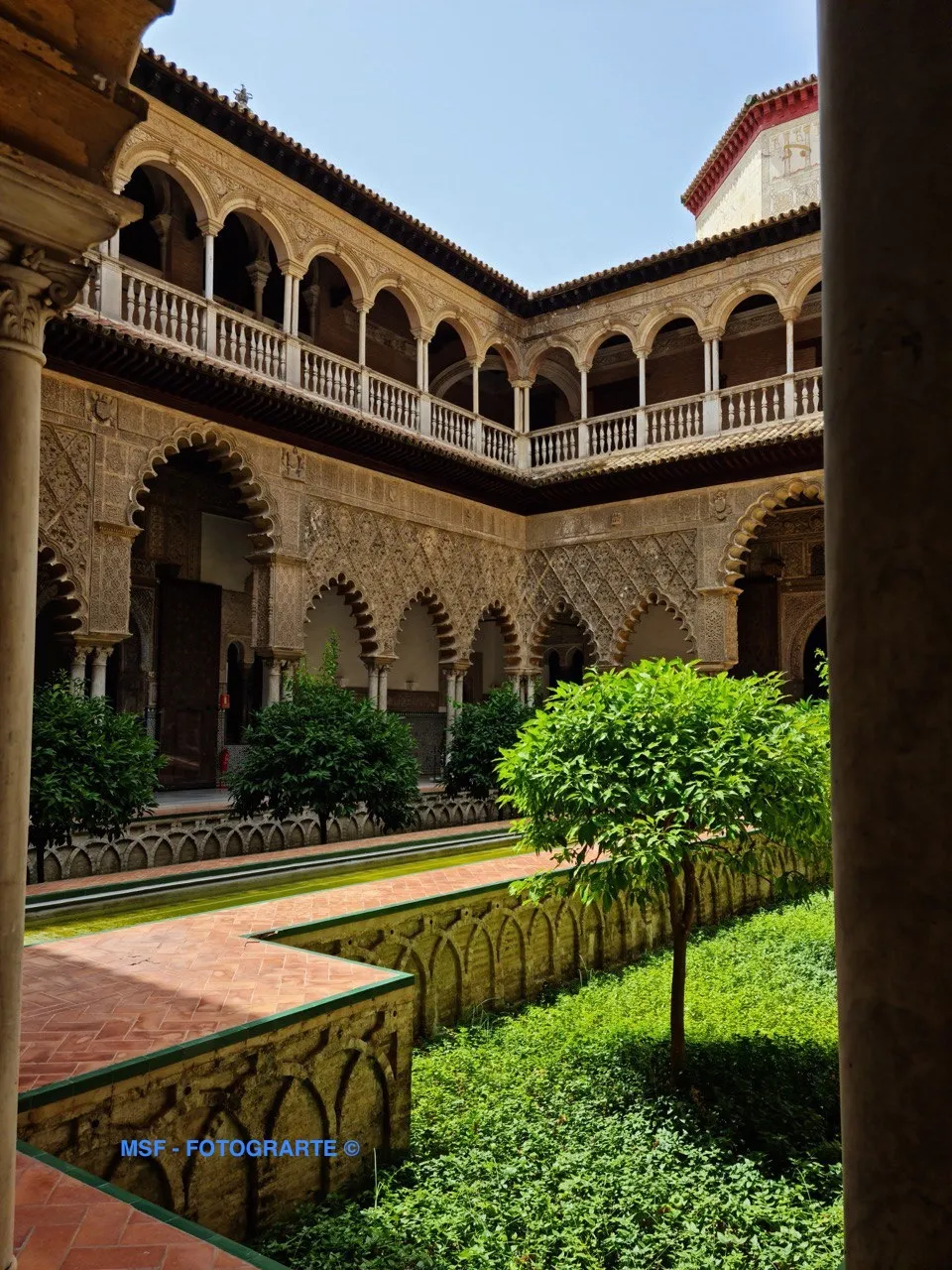
 Vista general desde la galería que bordea el patio. / General view from the gallery bordering the courtyard.
De la información del propio museo:
Este patio fue el centro del espacio público del Palacio del Rey Don Pedro I. La obra original del siglo XIV corresponde a la galería baja. Rodea este magnifico espacio una galería de arcos polilobulados, uno de los motivos decorativos más característicos de la dinastía almohade, junto con la decoración de los paños de sebka. La concha (símbolo de fertilidad y vida), la mano de Fátima (símbolo de protección), composiciones geométricas de lazo, decoración vegetal esquematizada y cartelas de epigráfica árabe de estilo cúfico completan el conjunto. Los escudos de los monarcas españoles rematan esta galería.
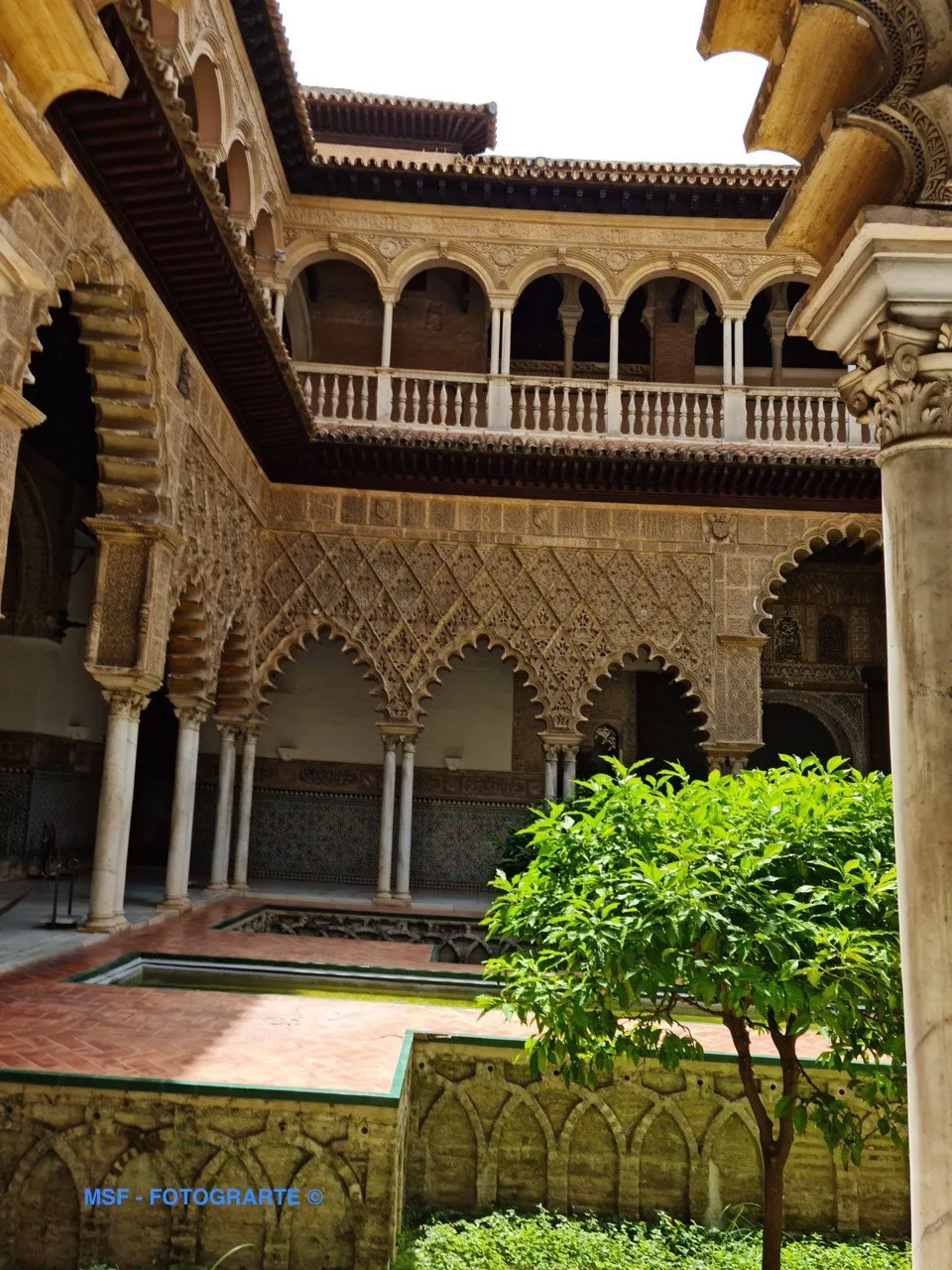 Vista general dos, para mostrar tanto la decoración de los lados de las fuentes, como la distribución de la galería alrededor del patio. / General view two, to show both the decoration on the sides of the fountains and the layout of the gallery around the courtyard.
From the museum’s own information:
This courtyard was the center of the public space of the Palace of King Pedro I. The original 14th-century work corresponds to the lower gallery. This magnificent space is surrounded by a gallery of multi-lobed arches, one of the most characteristic decorative motifs of the Almohad dynasty, along with the decoration of the sebka panels. The shell (a symbol of fertility and life), the Hand of Fatima (a symbol of protection), geometric ribbon compositions, schematic plant decoration, and Kufic-style Arabic epigraphic cartouches complete the ensemble. The coats of arms of the Spanish monarchs crown this gallery.
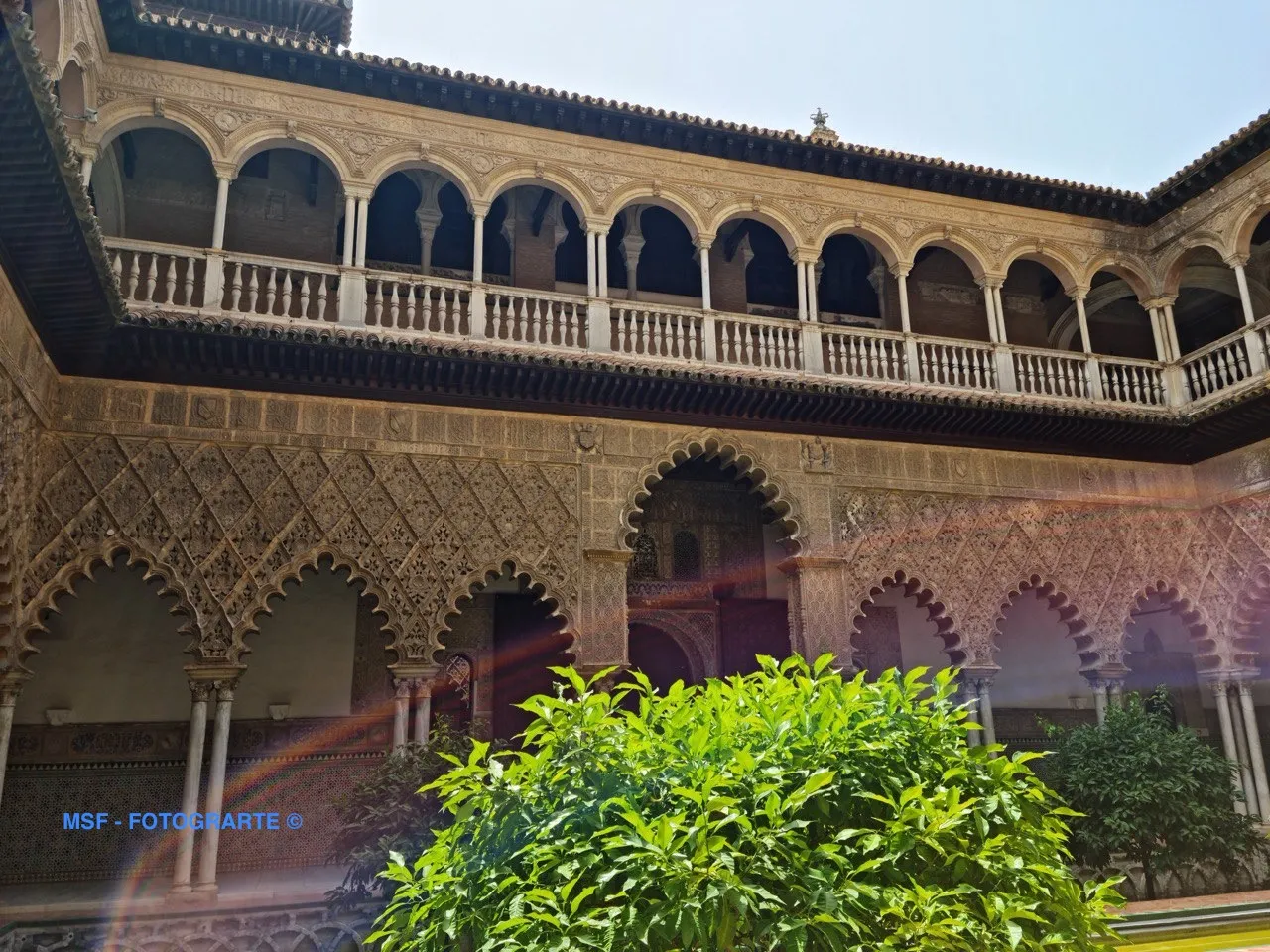 Vista general 3: aunque la foto no tiene la debida calidad (ha salido un reflejo extraño por el reflejo del sol de agosto en la cámara), la pongo igualmente porque se puede observar mejor la diferencia entra la galería inferior, almohade, y la superior, obra posterior , realizada en tiempos de los Reyes Católicos y mejorada por Carlos I de España (V de Alemania) con motivo de su boda.
 General view 3: although the photo is not of the proper quality (a strange reflection has come out due to the reflection of the August sun on the camera), I am posting it anyway because you can better see the difference between the lower gallery, Almohad, and the upper one, a later work, carried out in the time of the Catholic Monarchs and improved by Charles I of Spain (V of Germany) on the occasion of his wedding with Isabella of Portugal.
Un zócalo de cerámica recorre la parte inferior del muro, realizado mediante la técnica del alicatado. La parte central del Patio de las Doncellas estuvo cubierto con una solería de mármol, con una fuente renacentista en la parte central durante casi 500 años. Después de las excavaciones de 2005 se muestra tal y como se creó en el siglo XIV.
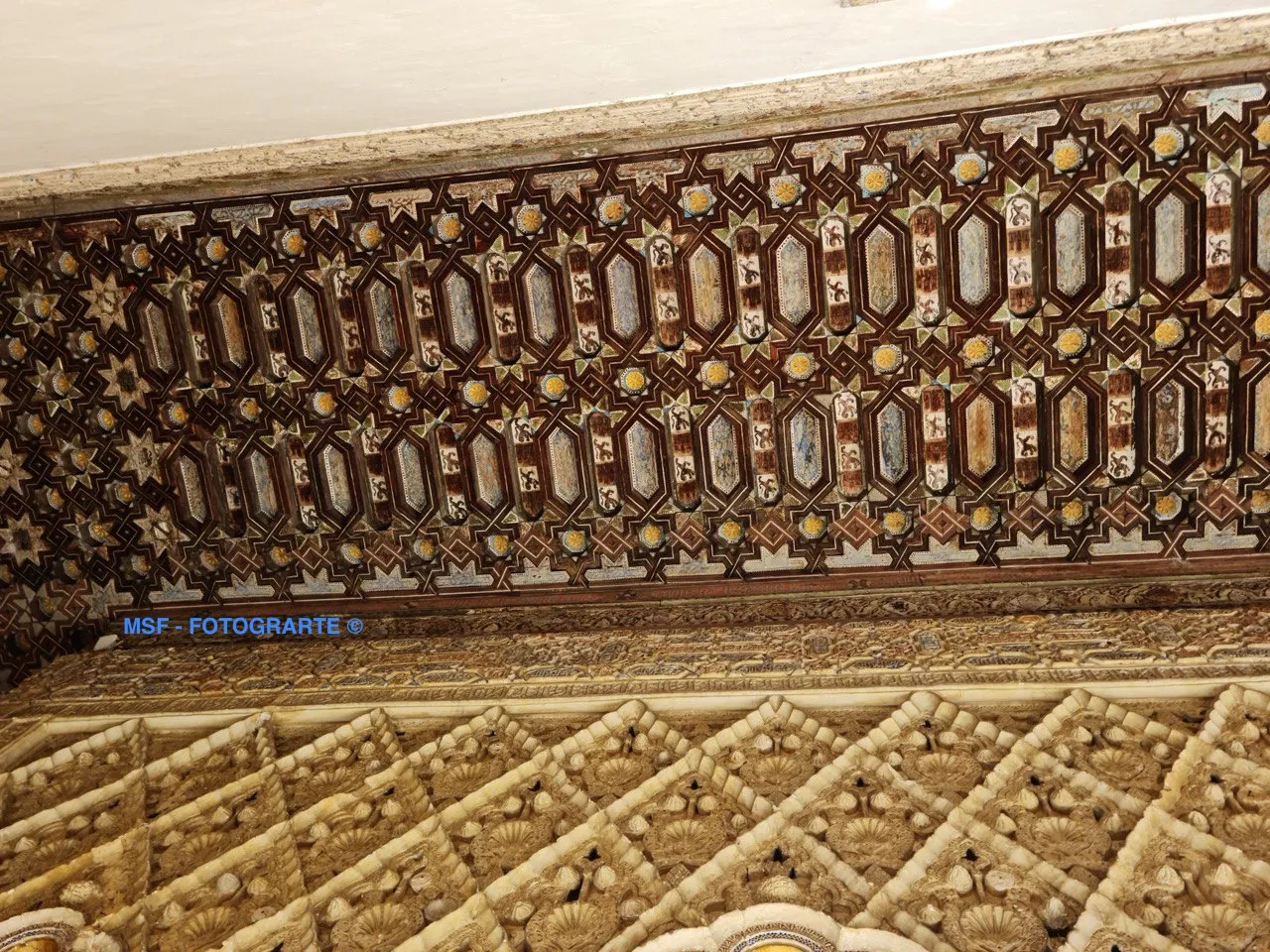 Artesonado del techo (detalle 1): podemos ver las estrellas en él y las conchas en la pared. / Coffered ceiling (detail 1): stars can be seen, carved in the Wood, and selles in the wall.
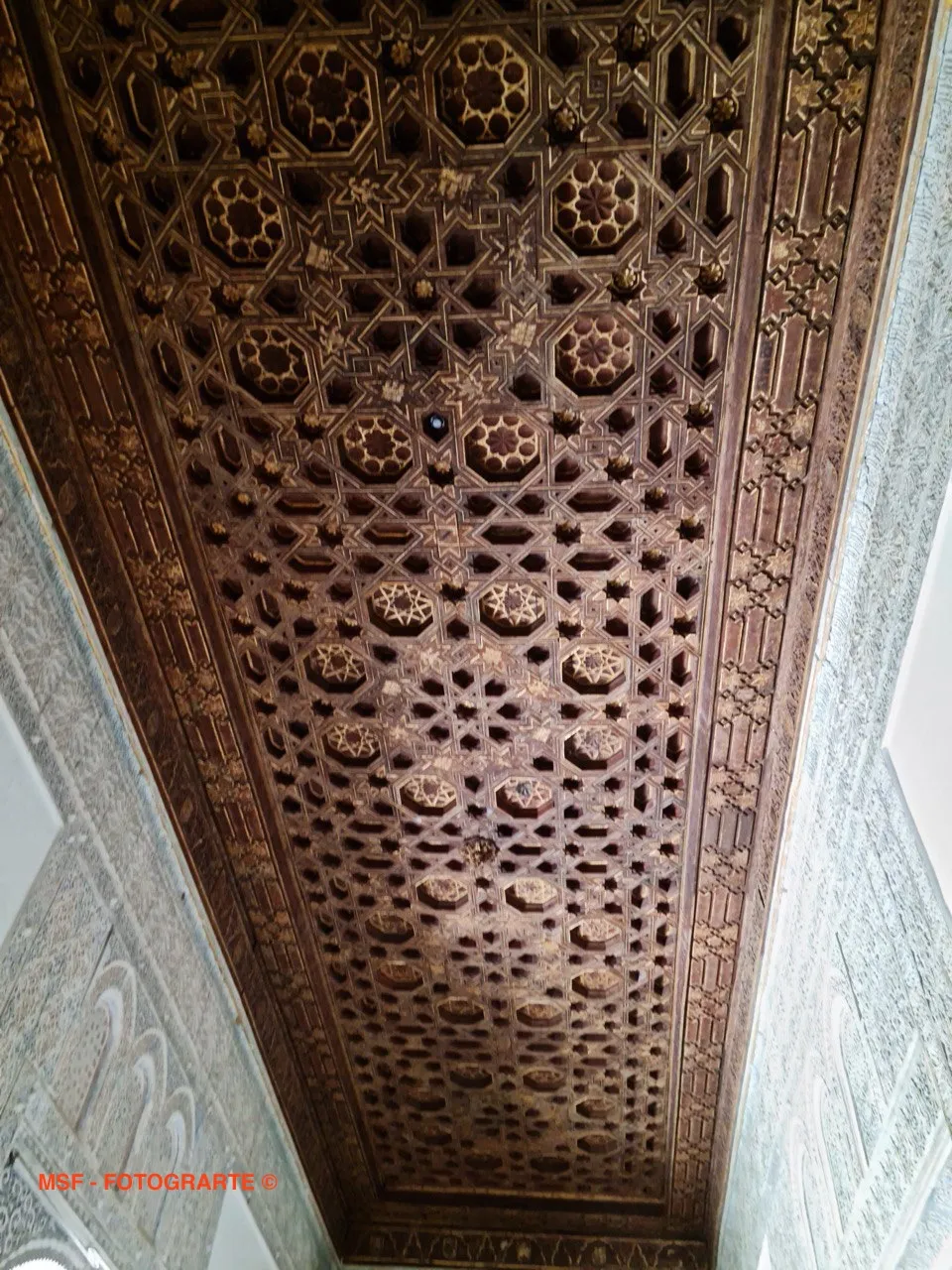 Artesonado del techo (detalle 2): otro modelo de estrellas en el artesano. / Coffered ceiling (detail 2): another star pattern in the craftsman.
A ceramic plinth runs along the lower part of the wall, created using the tiling technique. The central section of the Patio de las Doncellas was covered with a marble floor, with a Renaissance fountain in the center, for almost 500 years. After the 2005 excavations, it is displayed as it was created in the 14th century.
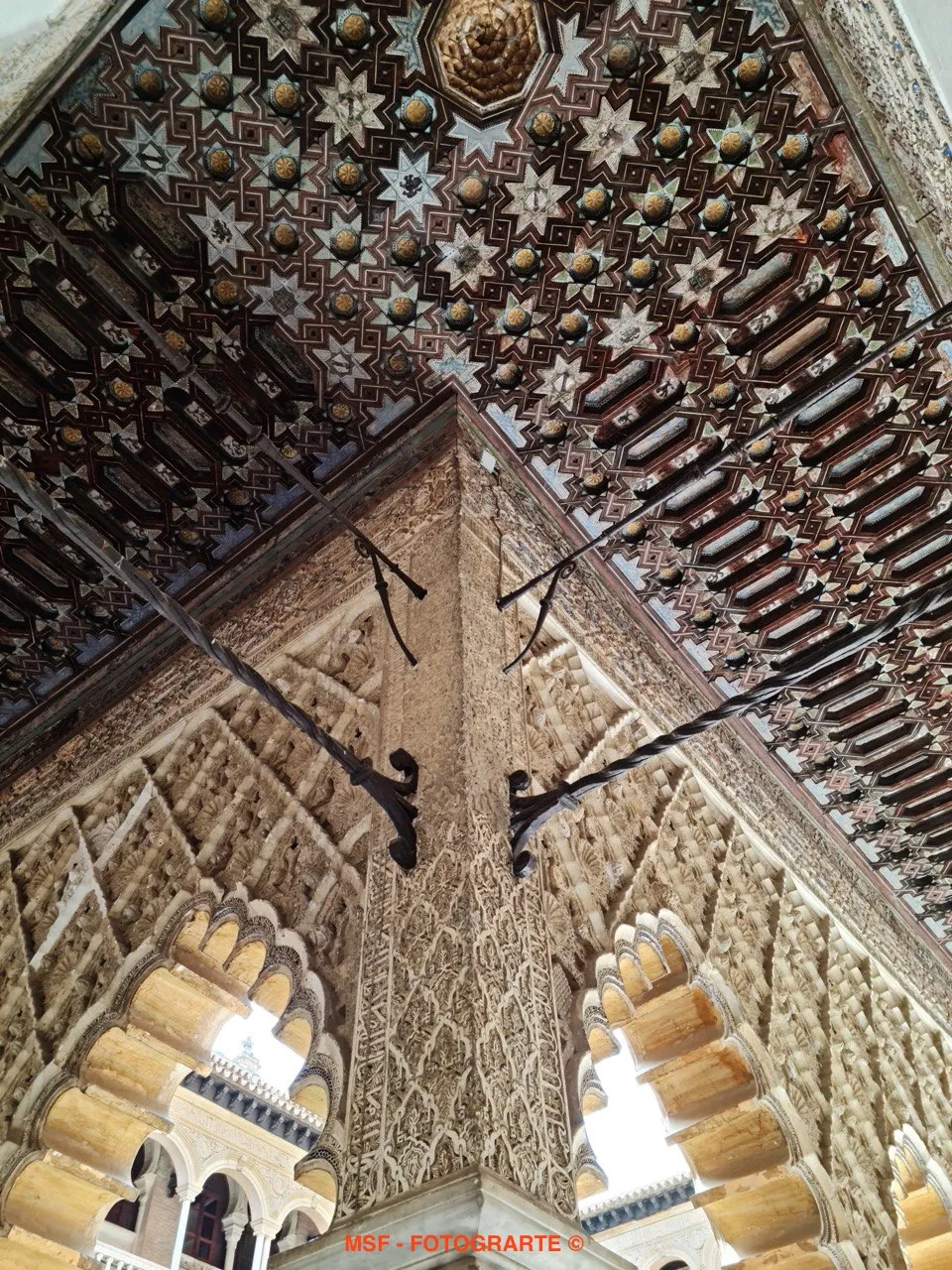 Otro detalle del artesonado del techo, donde pueden verse de una manera más clara las estrellas, típicas del estilo almohade. También pueden verse las conchas en la pared y los arcos polibulados, todo ello típico de este estilo del arte del período musulmán medieval español. / Another detail of the coffered ceiling, where the stars, typical of the Almohad style, can be clearly seen. Also visible are the shells on the wall and the polybulated arches, all typical of this style of art from the medieval Spanish Muslim period.
La planta alta es una ampliación posterior que hacen los Reyes Católicos. El Rey Carlos I de España y V de Alemania, hace una gran reforma en el Alcázar, con motivo de su boda.
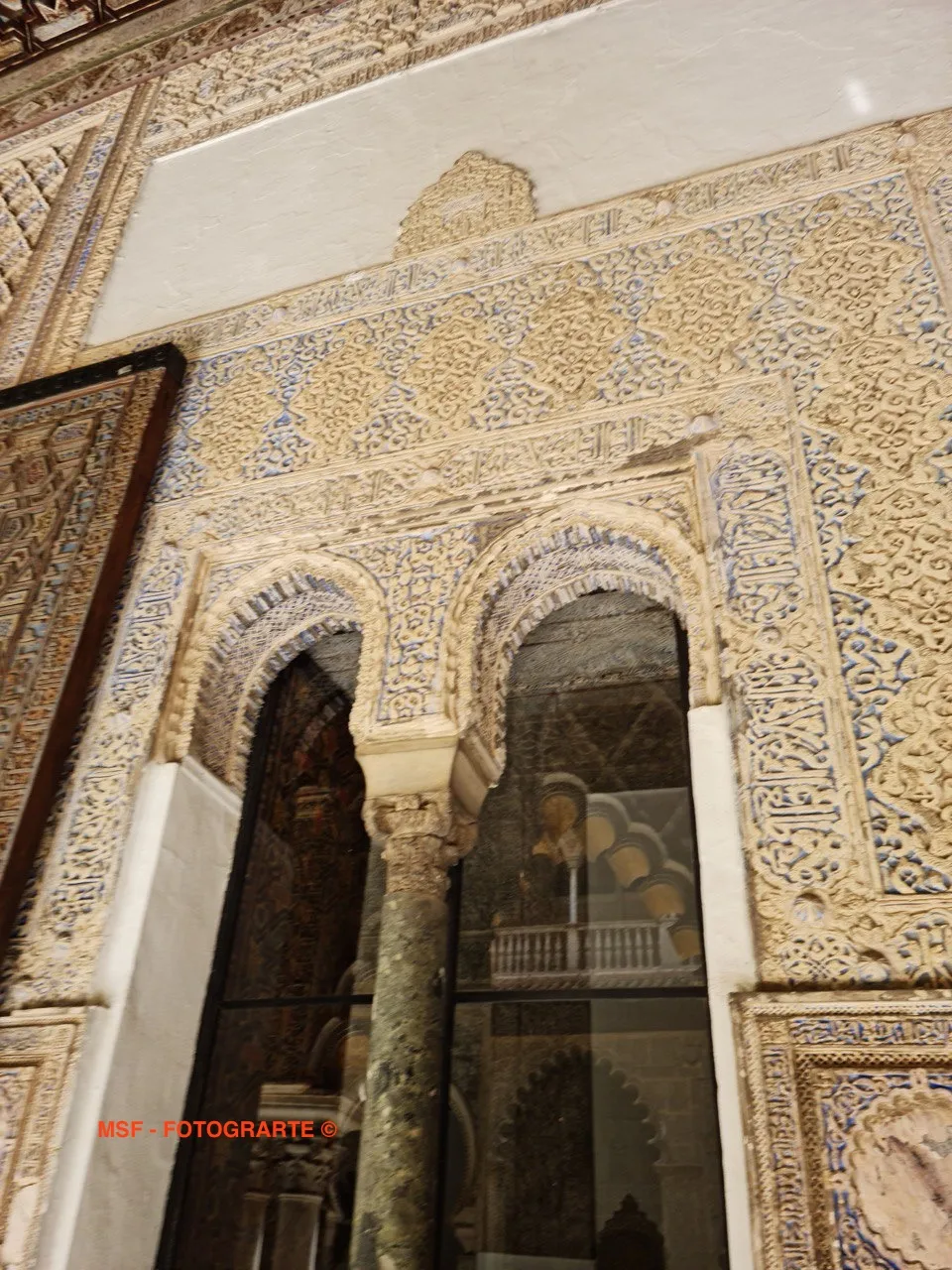 Terminamos con la puerta de entrada a la siguiente habitación: en la pared, se abren dos arcos gemelos, separados por una columna, que en tiempos tenía cortinas, pero hoy tienen un cristal, en el que se refleja el Patio que hemos visto. / We finish with the entrance door to the next room: on the wall, two twin arches open, separated by a column, which once had curtains, but today a glass divides the space. As you can see, the Patio is reflected on it.
The upper floor is a later extension made by the Catholic Monarchs. King Charles I of Spain and V of Germany carried out a major renovation of the Alcázar on the occasion of his wedding.
Anteriores entradas sobre los Reales Alcázares en Fotograrte:
- Fuente de la Fama: uno de los tres órganos de agua que quedan en Europa.
- Sala del Almirante: el cuadro «Las Postrimerías de San Fernando» de Virgilio Mattoni.
- Sala de Audiencia de los Reales Alcázares.
- Patio del Yeso.
- Patio de la Montería y y Fachada del Rey Pedro I.
- Vestíbulo.








 Puzzle Bobble
 Karate Blazers
 Puzzle De Bloques
 Magical Cat Adventure