


Según la información del propio Museo (English translation by me):
Estas piezas proceden a la calle Juan Ramón Jiménez, en Cádiz, donde se hallaron en una excavación de urgencia. Se trata de cinco bustos femeninos en diferente estado de conservación. Las piezas más sobresalientes aparecen en una actitud de bendecir (con la mano derecha levantada) y la otra sosteniendo un cervatillo que bebe de un cuenco.
These pieces come from Juan Ramón Jiménez Street in Cádiz, where they were found during an emergency excavation. They consist of five female busts in varying states of preservation. The most outstanding pieces appear in a blessing position (with the right hand raised), while the other holds a fawn drinking from a bowl.
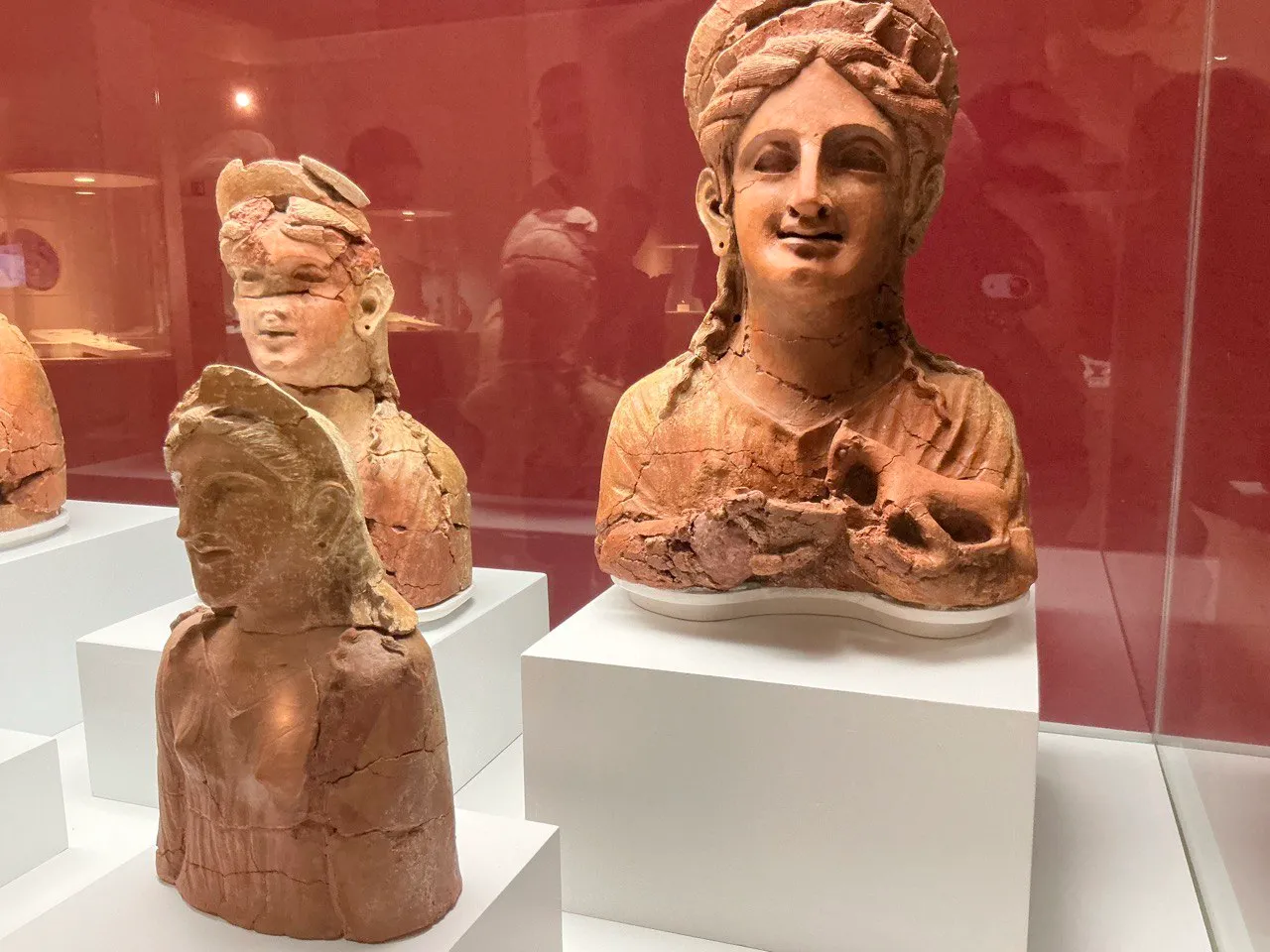
La cocción de las piezas es deficiente, con su superficie llena de grietas. Se deduce que las terracotas fueron desechadas su elaboración y arrojadas al vertedero de un taller próximo.
The firing of the pieces is poor, with their surfaces riddled with cracks. It is assumed that the terracottas were discarded after their production and thrown into the dump of a nearby workshop.
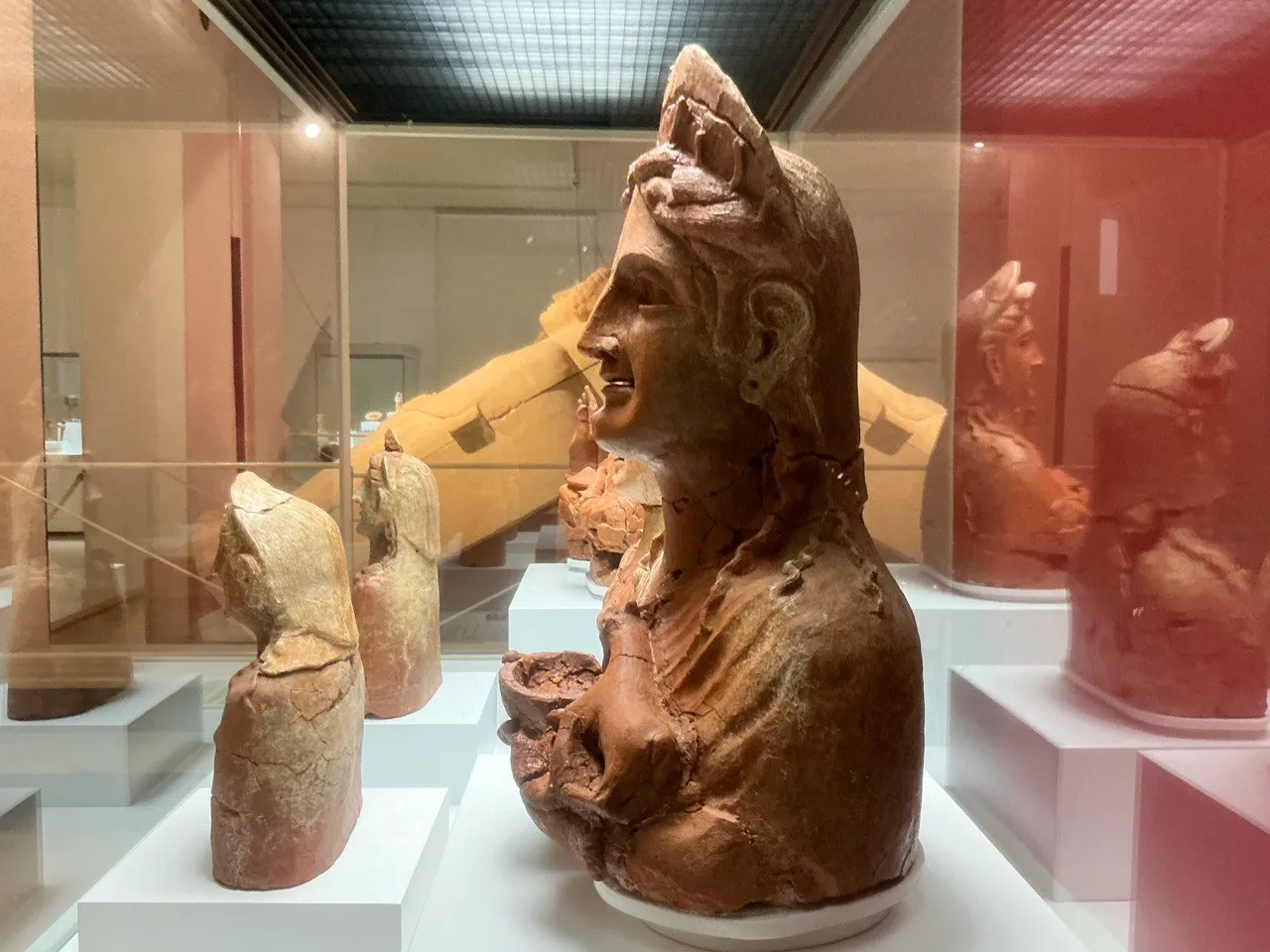
Este tipo de terracotas se asocia habitualmente con Astarté, divinidad muy venerada en Gádir. A partir del siglo V a C, la diosa fenicia comenzó a ser representada mediante bustos de influencia griega. Esta corriente partió de Sicilia, donde se mezcló con los ritos de Deméter, Perséfone y Koré (Divinidades griegas de carácter agrario vinculadas con la fecundidad) y con el culto propiamente cartaginés de Tanit, extendiéndose muy pronto al resto del mundo fenicio occidental. Las piezas gaditanas pueden representar tanto a la propia diosa como a sacerdotisas y devotas. Su cronología puede situarse en el siglo V a. C., dados sus rasgos arcaizantes.
This type of terracotta is usually associated with Astarte, a highly venerated deity in Gadir. From the 5th century BC, the Phoenician goddess began to be represented in busts influenced by Greek art. This movement originated in Sicily, where it blended with the rites of Demeter, Persephone, and Kore (Greek agrarian deities linked to fertility) and with the Carthaginian cult of Tanit, soon spreading to the rest of the western Phoenician world. The Gadir pieces may depict the goddess herself as well as priestesses and devotees. Their chronology can be dated to the 5th century BC, given their archaic features.
Podéis leer Gádir: el Cádiz fenicio a partir de sus obras de arte. English readers, please click here to read this same post in English.








 Puzzle Bobble
 Karate Blazers
 Puzzle De Bloques
 Magical Cat Adventure