


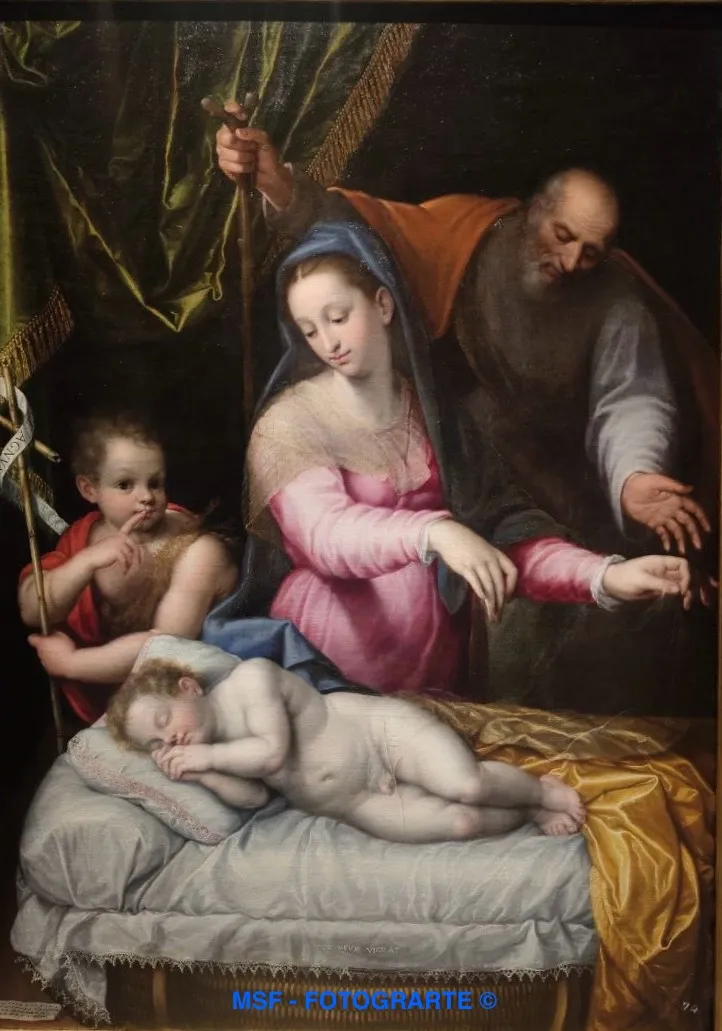
 Imagen del cuadro
Se trata de un óleo sobre lienzo obra de la artista italiana Lavinia Fontana en 1589, que puede verse en la Galería de las Colecciones Reales. La información de la propia Galería nos dice:
La escena está basada en el famoso cuadro de Rafael (hacia 1511-1512), hoy en el Museo Condé de Chantilly. Pero su interpretación personal fue tan novedosa que alcanzó un gran éxito en España, produciéndose numerosas copias y variantes del tema. Lavinia fue una de las pocas pintoras reconocidas y, una vez más, muestra al firmar esta obra su empeño por figurar como artista. Ello suponía un cambio en el papel y en la consideración de la mujer en la sociedad de la segunda mitad del siglo XVI. Su lenguaje claro y decoroso, muy acorde al sentir de la Contrarreforma del momento, tuvo un gran éxito en la corte papal y en todos los ambientes cortesanos. Felipe II consiguió poseer esta Virgen del Silencio, que es una de las mejores creaciones devocionales y que en 1593 se incorporó a las colecciones de El Escorial.
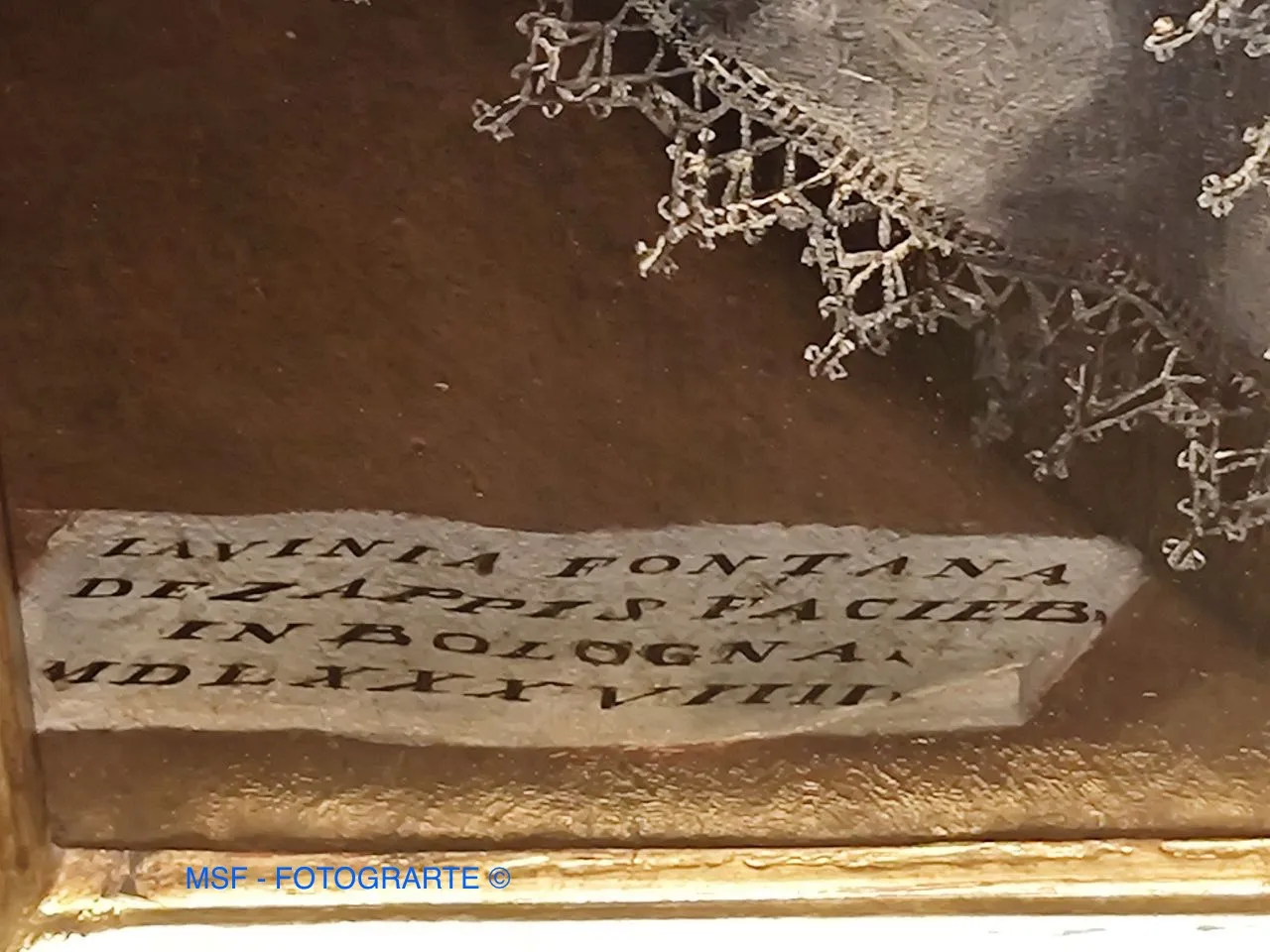 La firma de Lavinia en la pintura, en el lado izquierdo abajo / Lavinia’s signature in the painting (left side, down).
Oil on canvas, it is work by the Italian artist Lavinia Fontana in 1589, which can be seen in the Gallery of Royal Collections. From the information in the Gallery:
The scene is based on the famous painting by Raphael (ca. 1511-1512), now in the Condé Museum in Chantilly. But her personal interpretation was so novel that it achieved great success in Spain, with numerous copies and variants of the theme being produced. Lavinia was one of the few recognised female painters and, once again, she showed her determination to be recognised as an artist by signing this work. This meant a change in the role and consideration of women in society in the second half of the 16th century. Her clear and decorous language, very much in keeping with the sentiment of the Counter-Reformation of the time, was a great success in the papal court and in all courtly circles. Philip II managed to possess this Virgin of Silence, which is one of the best devotional creations and which was incorporated into the collections of El Escorial in 1593.






 Puzzle Bobble
 Karate Blazers
 Puzzle De Bloques
 Magical Cat Adventure