


Este Mosaico fue encontrado en la villa romana de Puente Melchor (Puerto Real, Cádiz) y puede verse hoy en el Museo de Cádiz. Datado alrededor del final del siglo II dC – primer tercio del siglo III dC.
This Mosaic of Bacchus, which can be seen nowadays at the Museum of Cádiz, was found at the Roman villa of Puente Melchor (Puerto Real, Cádiz). End of the 2nd century AD – first third of the 3rd century AD.
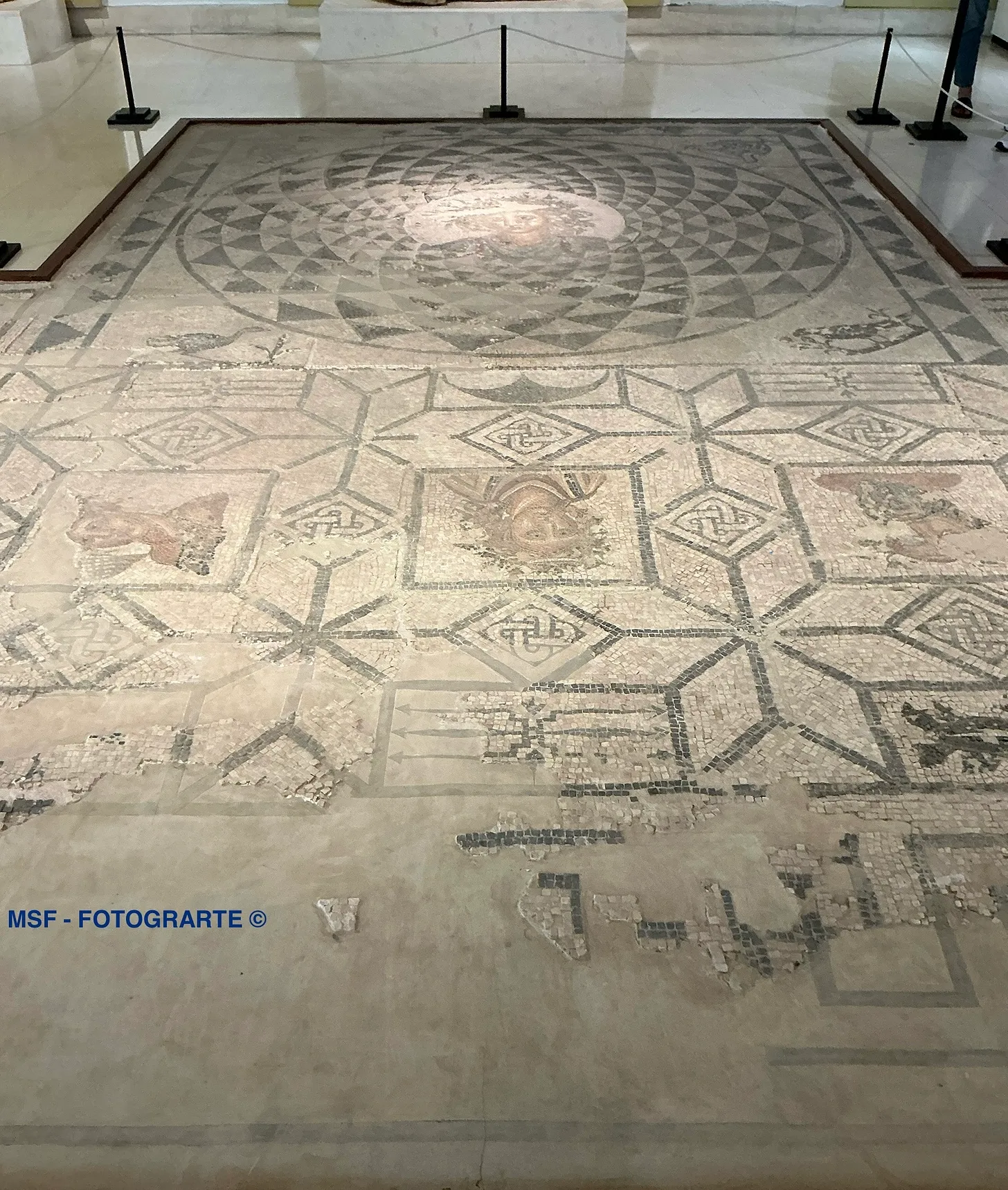
El problema fundamental que plantea en el momento de fotografiarlo, no es sólo su extensión, sino su forma de T.
The fundamental problem when photographing it is not only its size, but also its T-shape.
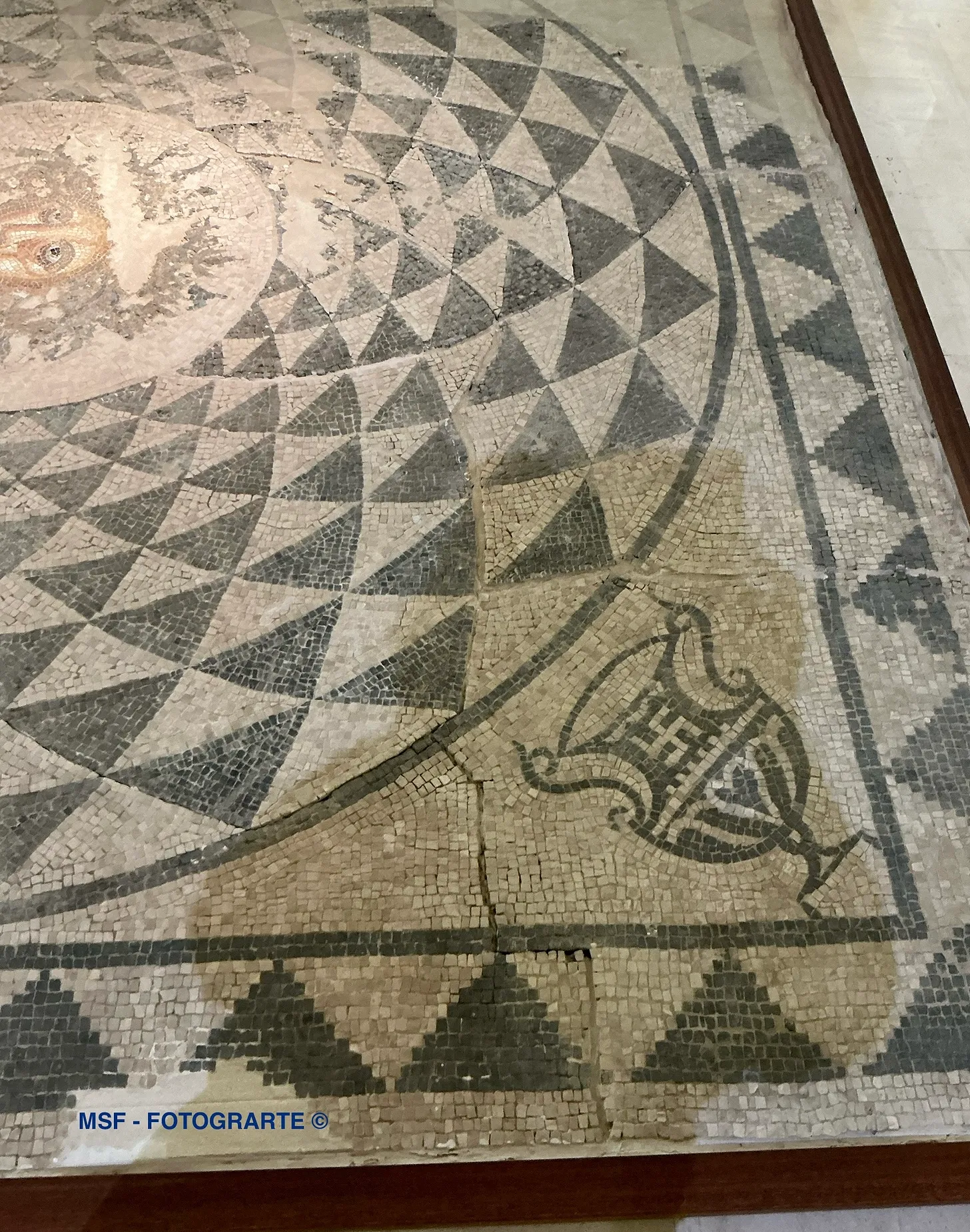
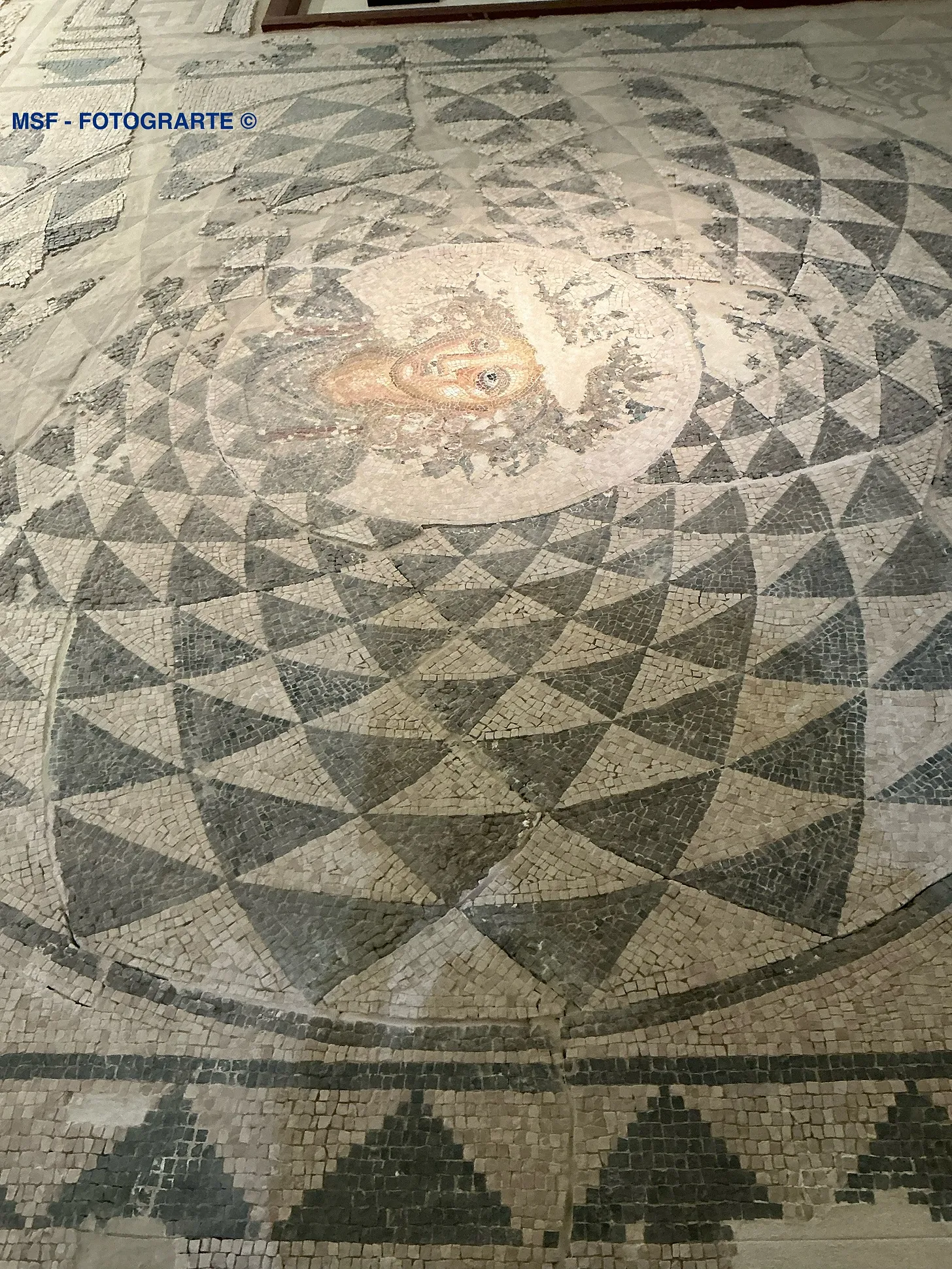
Pavimento de un triclinium (comedor) de una lujos villa rústica situada en un área de importante producción alfarera cercana a la posible ubicación del Portus Gaditanus. Mezcla motivos geométricos en blanco y negro con otros figurativos polícromos y su tema central se sitúa en un cuadrángulo en el que se inscribe una gran roseta de triángulos curvilíneos que enmarca un círculo con el busto del dios Baco. Los espacios situados entre los ángulos del cuadrilátero y la roseta están ocupados por dos cráteras y dos aves exóticas.
The pavement of a triclinium (dining room) of a luxurious rustic villa located in an area of important pottery production near the possible location of the Portus Gaditanus (ES). It mixes geometric motifs in black and white with other polychrome figurative motifs and its central theme is located in a quadrangle in which a large rosette of curvilinear triangles is inscribed, framing a circle with the bust of the god Bacchus. The spaces between the corners of the quadrilateral and the rosette are occupied by two kraterals and two exotic birds.
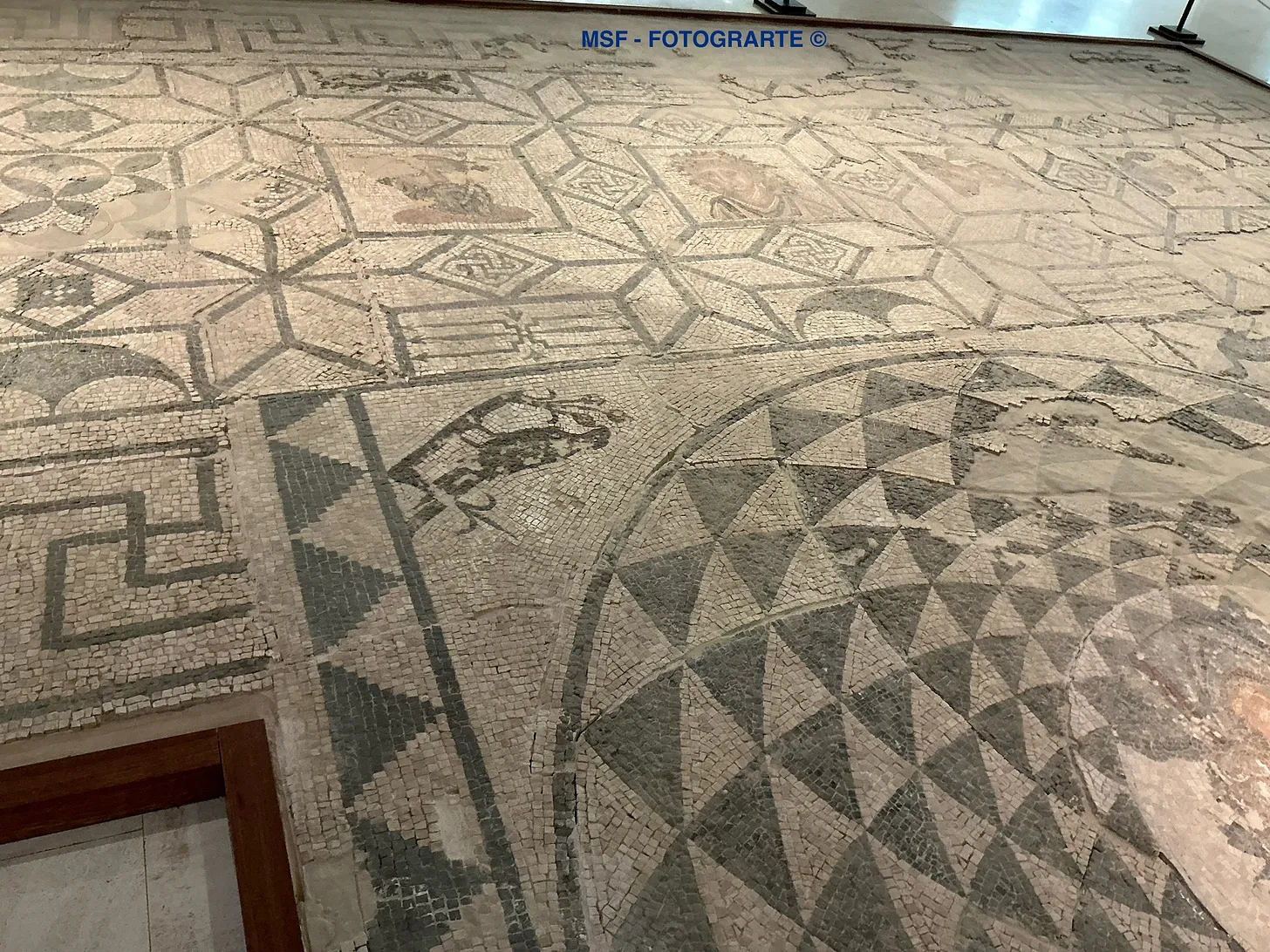
La zona más amplia es de forma rectangular y su decoración está resuelta mayoritariamente por temas geométricos que sirven de marco a cartelas con los bustos de figuras mitológicas integrantes del cortejo de Baco. Apolo, con una hoja de laurel situada sobre su hombro derecho; Pan con una flauta; Ariadna, la única mujer, con racimos de uvas a ambos lados del rostro y Sileno coronado por hojas de hiedra con el torso desnudo y poblada barba.
The largest area is rectangular in shape and is mainly decorated with geometric themes that serve as a frame for cartouches with the busts of mythological figures in Bacchus’ retinue. Apollo, with a laurel leaf over his right shoulder; Pan with a flute; Ariadne, the only woman, with bunches of grapes on either side of her face; and Silenus crowned with ivy leaves, with a bare torso and a bushy beard.
Os dejo un artículo de la Revista Investigación y Letras del año 2017 en el que se hace un estudio sobre esta obra de arte. En él se hace un estudio comparativo muy interesante con otros mosaicos romanos de la misma época encontrados en España y en Italia (Sicilia), que presentan características muy similares.






 Puzzle Bobble
 Karate Blazers
 Puzzle De Bloques
 Magical Cat Adventure